AI doesn't replace your team. It changes what they work on.
The best AI implementations don't cut headcount. They redirect talent from assembly work to judgment work.
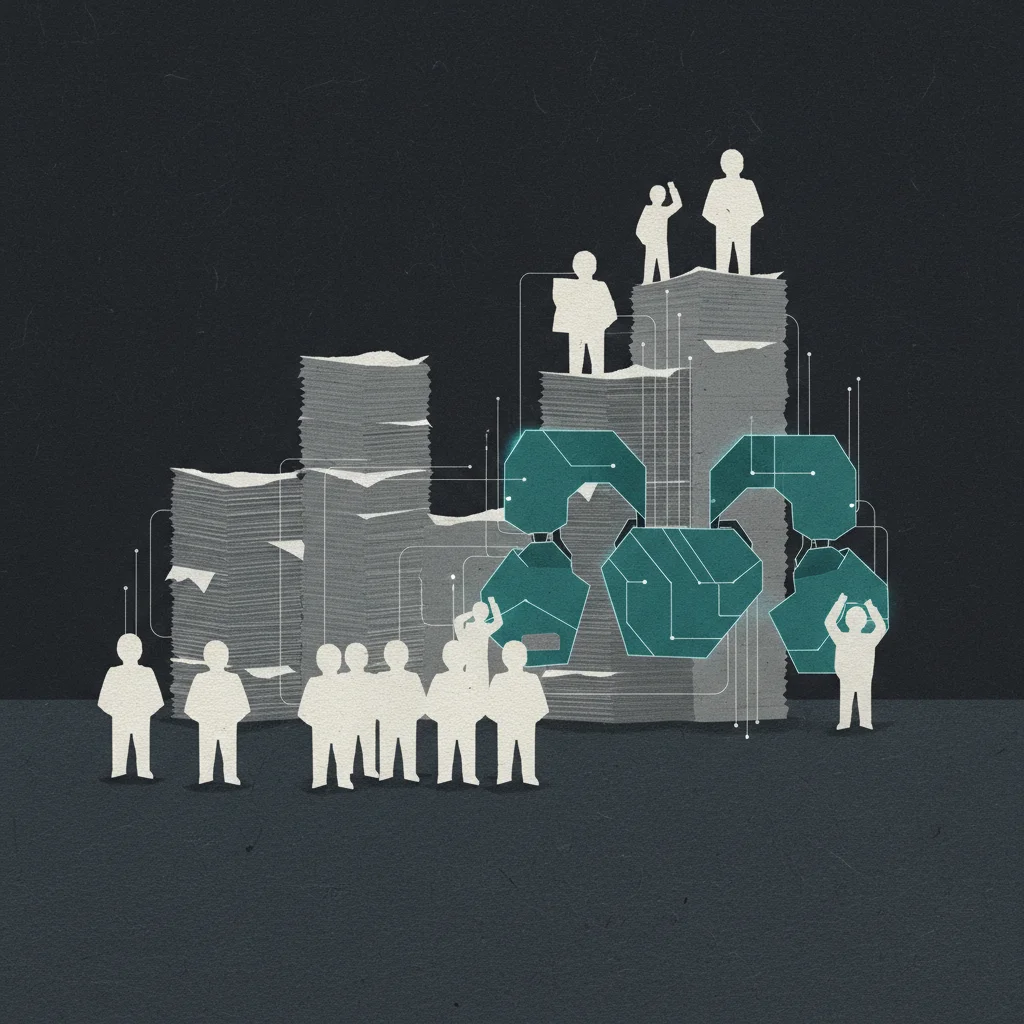
The first question that comes up in almost every AI conversation is the one nobody wants to ask out loud: are we talking about replacing people?
No. And from what we’ve seen, the businesses that approach AI with that mindset tend to struggle with adoption.
The assembly vs judgment distinction
Most roles contain two types of work. Assembly work and judgment work.
Assembly work is the collection, formatting, compilation, and distribution of information. Pulling data from one system, formatting it for another. Compiling a report from multiple sources. Copying information between documents. Scheduling, chasing, following up.
Judgment work is the analysis, decision-making, strategy, and relationship-building that requires human context. Understanding what a client actually needs. Knowing when a number looks wrong. Choosing which direction to take a project.
Many people spend far more time on assembly than judgment. AI changes that ratio. This is closely related to why most adoption fails at the workflow level: the value comes from redesigning how work flows, not just speeding up individual tasks.
What this looks like in practice
Take an account manager at a marketing agency. Their week might break down as 60% assembly (writing reports, pulling analytics, formatting presentations, sending status updates) and 40% judgment (strategic recommendations, client conversations, problem-solving).
With well-designed AI systems handling the assembly, that ratio shifts. Maybe 20% assembly, 80% judgment. The same person, the same role, but spending four times as much of their week on the work that actually moves the needle.
They don’t lose their job. They lose the parts of their job that were slowing them down.
Why headcount reduction fails
Some businesses approach AI as a cost-cutting tool. Automate the work, reduce the team. On paper it looks efficient. In practice, it often creates more problems than it solves.
First, you lose institutional knowledge. The people who run your processes know things that aren’t written down. Why this client prefers their reports in a certain format. Which supplier to avoid. What the CEO actually means when they say “keep it simple.” That knowledge is at risk of walking out the door.
Second, you lose the ability to improve the system. AI systems need human oversight, refinement, and judgment to stay useful. With fewer people, there’s often no one with the bandwidth to improve the system. It stagnates.
Third, you lose trust. The remaining team sees AI as a threat. Adoption stalls. People find reasons not to use the new tools. The investment underperforms.
The adoption conversation that works
When introducing AI to a team, the framing matters more than the technology. What works:
“This handles the compilation so you can focus on the analysis.” People hear: my judgment matters more, not less.
“We’re automating the report assembly, not the recommendations.” People hear: the part I find tedious is going away.
“Your expertise is what makes this system useful. It needs your input to improve.” People hear: I’m part of this, not replaced by it.
The real outcome
The organisations we’ve seen get the most from AI aren’t necessarily the ones with smaller teams. They tend to be the ones with the same teams doing better work. More strategic. More creative. More focused on the things that humans are genuinely better at.
AI doesn’t replace your team. It promotes them.